
Stay up to date on
the latest news
From news to videos to research, we keep you in the loop of the changing world of global security.



¿Hasta Cuándo?
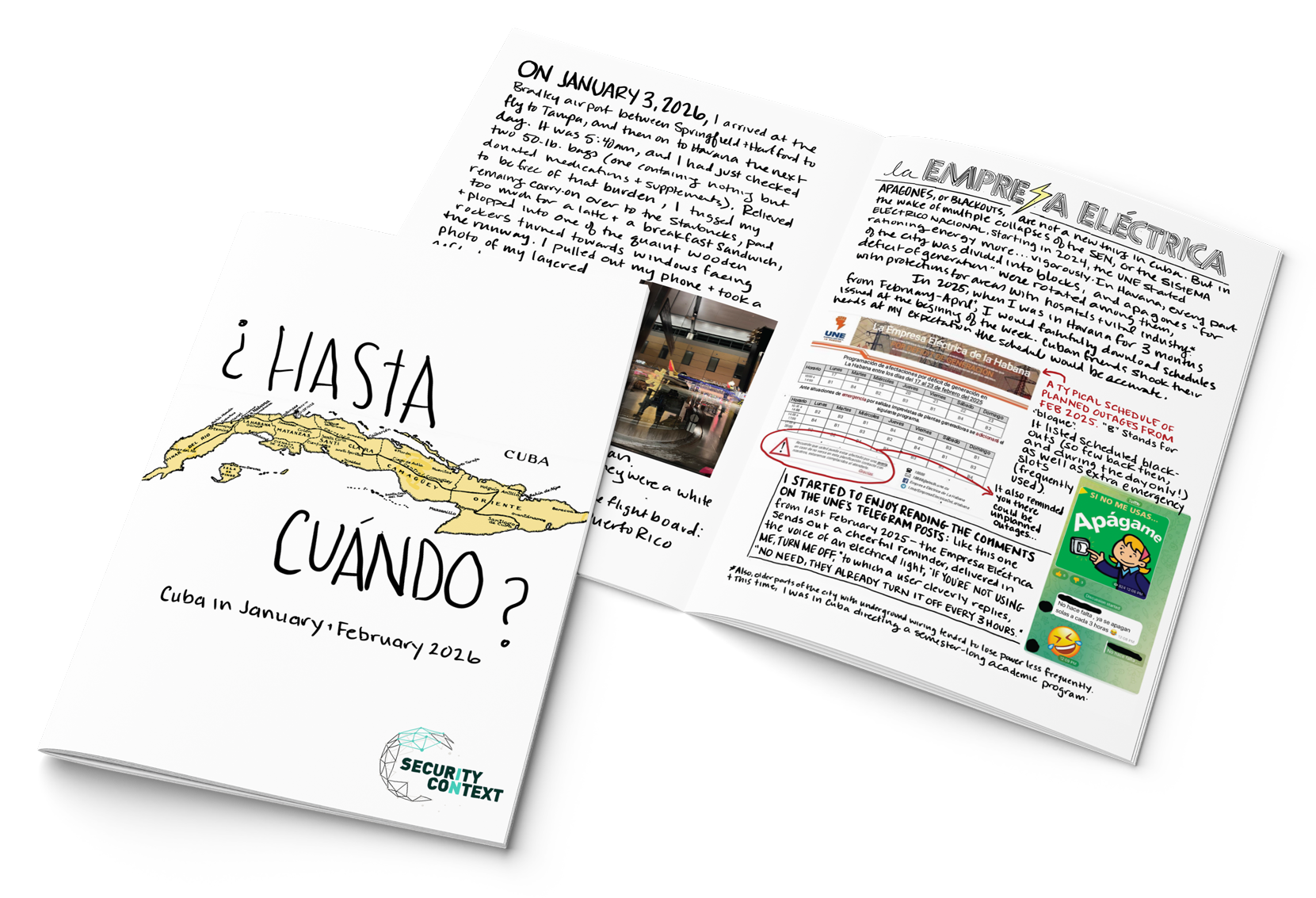
Security in Context is proud to be publishing a special edition of ¿Hasta Cuándo? Cuba In January and February 2026, a 40-page print zine written by Michele Lee Hardesty about their time and experience in Cuba. Over the past year, the U.S. government has escalated its attack on Cuba, in line with its aggressive and destructive foreign policy across Latin America and the Caribbean.
Hardesty’s zine is truly unique, presenting a side of Cuban society’s struggles and everyday life in Havana that is rarely seen or understood. It is beautifully written, compassionate, and well researched, with extraordinary insights on every page. It’s a must-read for anyone interested in Cuba as well as a teaching tool for students of Latin America and US foreign policy.
Omar S. Dahi
Director, Security in Context
Author's Introduction
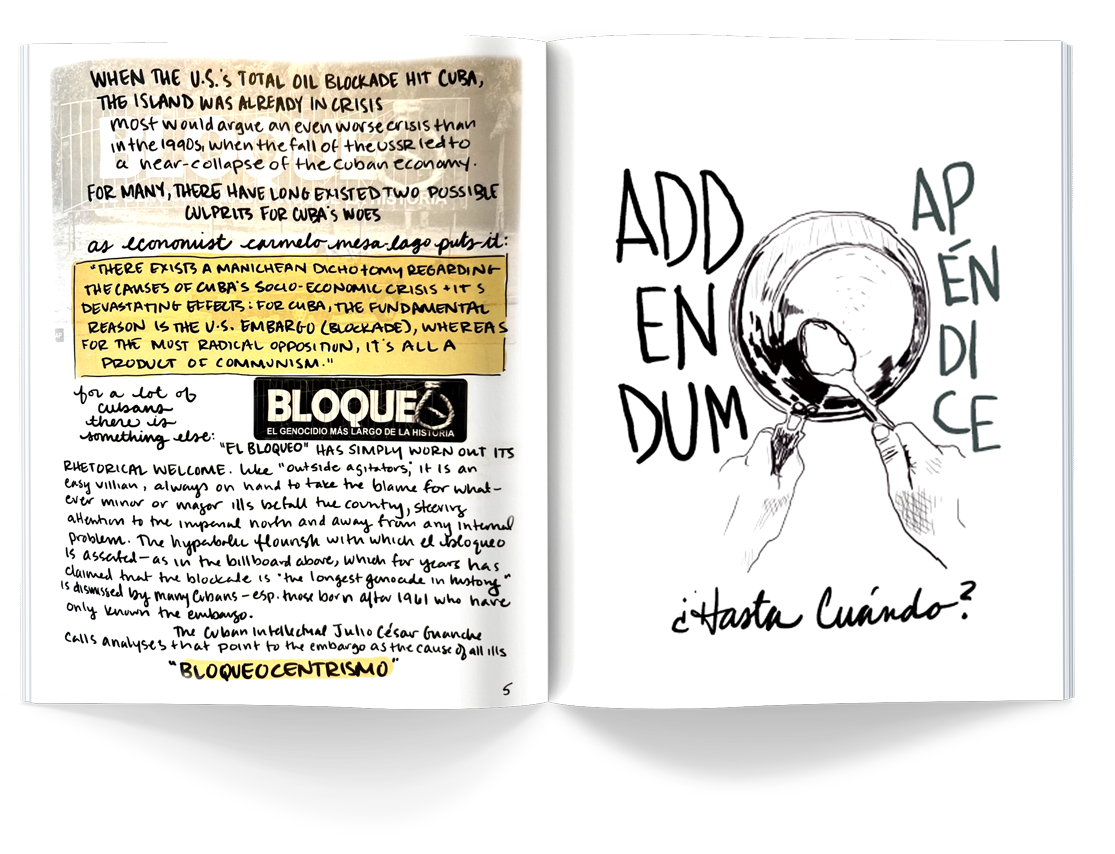
¿Hasta Cuándo? Cuba in January and February 2026 is a 40-page zine about my experience of being in Havana from the day after the Maduro capture until the middle of February 2026, a period when the U.S. blockaded Cuba’s oil supply, deeply exacerbating the island’s existing crisis. It includes a minizine, Addendum/Apéndice, that I made after a short return visit in late May/early June.
The zine started as a report back to friends and acquaintances in the U.S. about the trip. It kept expanding as I wrestled with the necessary context and history needed to explain, from my perspective, what was happening in Cuba and set out my politics of solidarity.
My perspective is one of a white, cisgender woman; a professor of literature and American Studies; and a lifelong citizen of U.S. empire. My perspective has been shaped by the time I have spent in Cuba, mostly in Havana. I have traveled to the island more than ten times over the past 14 years, with stays ranging from one week to three months. For this year’s trips, I was on sabbatical and doing research for two projects. Primarily, however, I have taken these trips to prepare or lead Hampshire College’s semester program in Havana.[1]
That program, Hampshire in Havana, was more independent than many.[2] It was stewarded by a committee and a partner committee in Havana, affiliated for the last ten years with the Alejo Carpentier Foundation. Students of the program worked with a vast network of mentors in Cuba to pursue mutually-designed projects, and instead of an extractive experience, we foregrounded the values of reciprocity, mutual respect, and accompaniment. I appreciated the program for the way it introduced students to a Cuba that was complex, surprising, and unexpected, and that upset any fantasies [(neo)colonial or leftist] they held before arriving. Like our students, my perspective was transformed by the program, and I have made lifelong friends onthe island and in the diaspora.
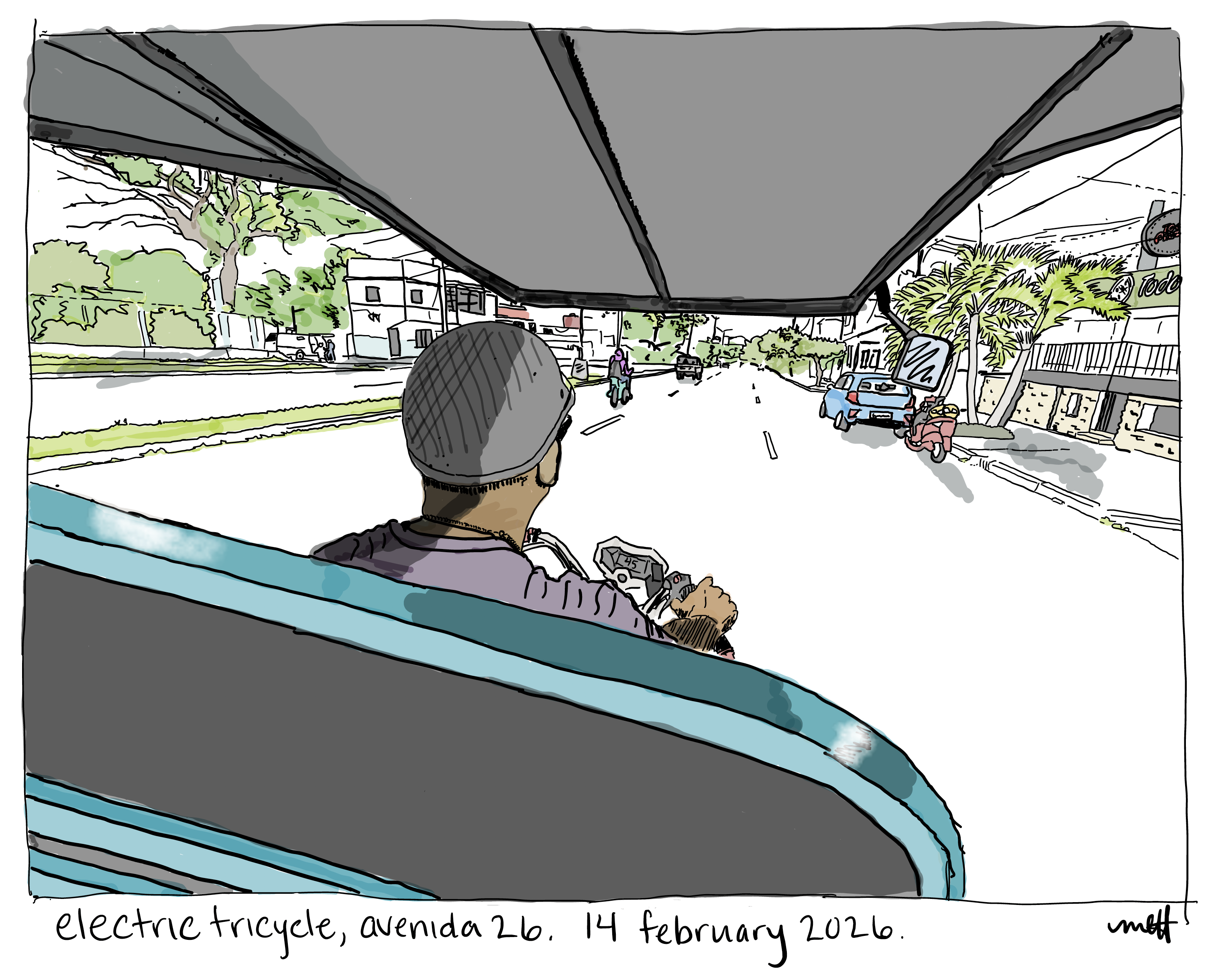
The zine extends that pedagogical work a nd draws on those networks, and I am also influenced by a long history of critical political travelogues and comics journalism. I recorded my experiences and those of friends and acquaintances while living in Havana over a month and a half in January and February. I kept up with Spanish-language Cuban news and announcements—official press, opposition press, and those who tried to be somewhere in between. When I included an anecdote, it was something I had heard several people, people I have known for years, tell me about, whether it be what their son is dealing with in Marianao, the experience of their extended family in Camagüey, or what it is like in Santiago.
When I got home and started to work on this zine, I did my research. In ¿Hasta Cuándo?, I intersperse personal narrative with historical context for the crisis—or polycrisis—drawing on the work of scholars of Cuba and US-Cuba relations. Using image and text, the zine explains the history of the U.S. embargo and policy decisions of the Cuban government from the 1990s to the present. With that history in place, I talk about the crisis that already existed before 2026, before turning to U.S. Executive Order 14380 (1/29/26), which allowed the U.S. to impose tariffs on countries that provided oil to Cuba, and the austerity measures that Cuba took in response. In Addendum/Apéndice I address how living conditions had changed while referencing the impacts of the U.S. indictment of Raúl Castro and U.S. Executive Order 14404 (5/1/26), which threatened to freeze the assets and impose secondary sanctions on foreign companies that did business in Cuba.
Since June, conditions have deteriorated and there is an acute sense of hopelessness on the island. “I just want to escape the consequences,” a friend in Cuba wrote me recently, responding to my reflections on what led to this moment. I can empathize with that exhaustion. For those of us outside of Cuba, however, we have a different responsibility, and that responsibility is to build solidarities based in critical understanding and in hope.
1. Under the current sanctions regime,such travel is possible under general licenses §515.564 and §515.565 of theU.S. Treasury Department’s Cuban Assets Control Regulations.
2. I say “was” because Hampshire College announced its imminent closure this year, and with it the 26-year-old Hampshire in Havana program comes to an end.
Author Bio
Michele Lee Hardesty is an educator, researcher, and creator who is a Visiting Associate Professor of English at Mount Holyoke College, Faculty Associate at Five Colleges, Inc., and Associate Professor Emerita of U.S. Literatures & Cultural Studies of Hampshire College. Their long-term research concerns the crosscurrents of social movements and literary cultures during and since the Global Cold War era, with a focus on the cultural politics of international solidarity in the shadow of U.S. empire. Her work has been published in various journals such as Boundary 2, Radical History Review, and Critical Quarterly, and in collections such as Transnational Beat Generation (Palgrave, 2012), Neocolonial Fictions of the Global Cold War (U of Iowa, 2019), and, with Alana Kumbier and Nora Claire Miller, Transforming the Authority of the Archive: Undergraduate Pedagogy and Critical Archive Studies (Lever, 2023).
Get a Copy.
We are very pleased to be able to offer this unique resource for free to anyone interested. To request your print copies, please fill out the adjancent form. Questions? You can contact me: omar@securityincontext.org.


